Columns of Air
Tyler Dillon
In An ghaeltacht regions of Ireland, there are strange connections with an ancient tidal landscape not known in history books, and brief windows into other realms, through song. Ghaeltacht are the regions in Ireland where the Irish language is, or was, until recently, the most-widely spoken dialect in its communities.
All languages are shaped by the environment in which they are born, and carry the landscape and temperature within them. Each one has variations, and through them, cultures are expressed. We have all heard the multiple words for snow, or the different shades of colours, which, for example, make the category between light and dark blue that much more distinct.
Language is the collective expression of thoughts, myths, beliefs, ideas, dreams, and inspirations, ‘brought into being by the human imagination,’ and turned into sounds. It is in the fringes where we find the extreme examples, and it is in the corners of the world where old cultures have receded, that the fringes of language live on; in the swamps of Louisiana Cajun is still spoken, Gullah in the low country Carolinas, and Yiddish in New York City.
On the west coast of Ireland, there exist communities that still speak and sing in ancient ways. Their traditional song is called Sean-nós (meaning old style, and pronounced SHAN-ohss). The swell of the sea pulses through the timbre of its speech patterns, creating vibrations in its verse, or rolling undulations. You feel this magnified, when in a small room with an unaccompanied Sean-nós singer; with no instruments their solo voice is like a column of air, its melody and volume coming and going in waves.
Sean-nós is done amidst community, at home - in a room full of friends and family - or in a public house. These are songs that need others, for their purpose is to share, emote, and inspire. In the act of setting poetry to music, they provide light to emotional connection. They communicate pain from death of a loved one, sadness from longing, or jubilation from love and birth.
Watching someone sing in the Sean-nós style is like feeling a hug; it is intimate, emotive, and delicate, which is perhaps why the singer will, at times, reach out to grasp a hand from a listener, close by. With eyes closed, their voice becomes a conduit, accessing a universal well of emotion and memory, which infects a room through its vibration, and all the while, their hand is tethered physically to the listener’s as if they might be at risk of being swept off and overwhelmed by memory forever. Their two hands sway and pump in a slow circular motion with the song and the swell in the air. This is called ‘hand-winding’ and the audience member involved is termed the windáil, the winder.
* * *
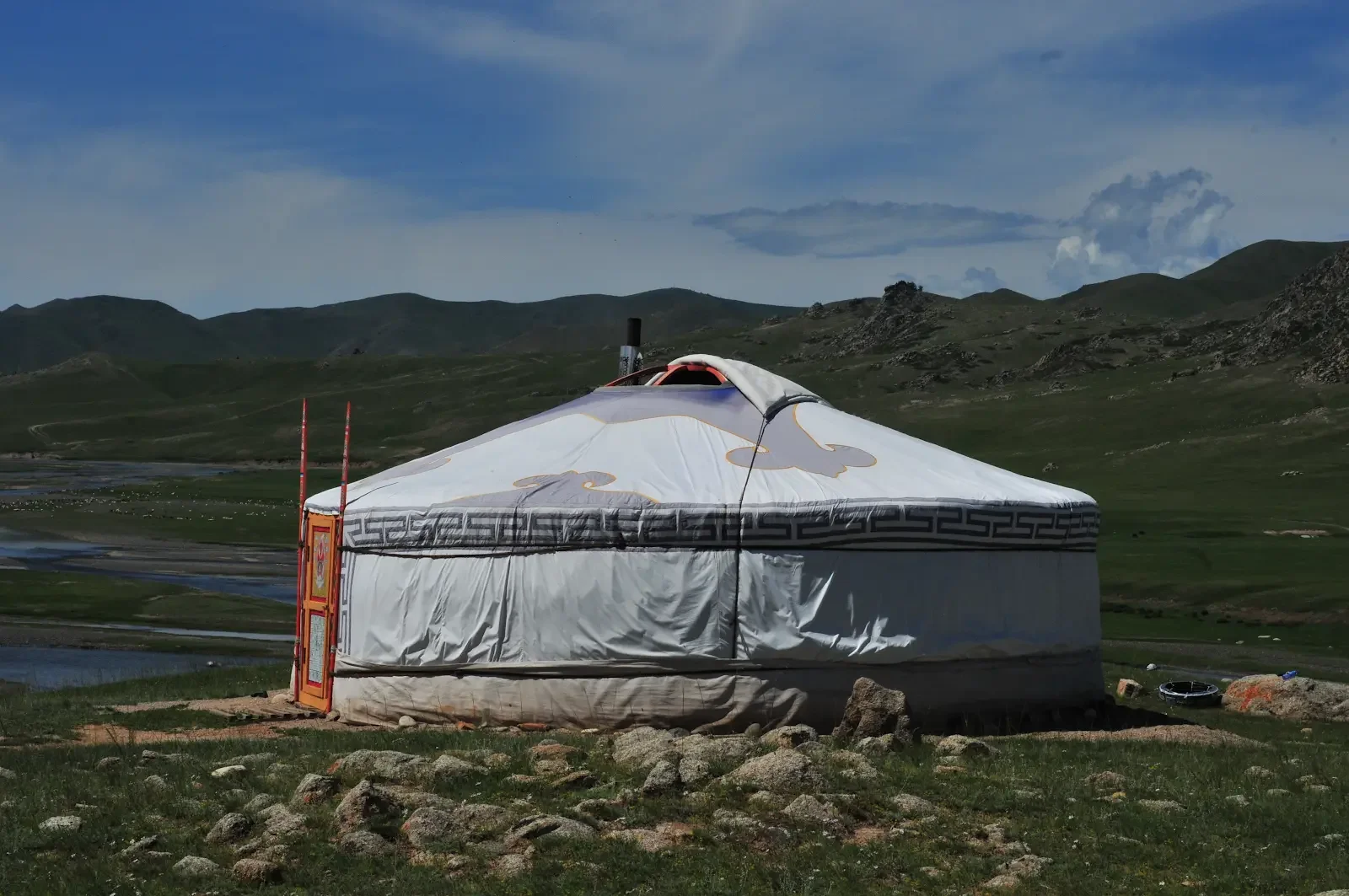
In the grasslands and sands of the Mongolian Steppe, there are times when a herder's beast of burden, the Bactrian camel, will refuse its offspring. This happens when the newborn appears weak or odd, and is thus shunned. In an adaptation to avoid loss of livestock and property, there is a tradition of the herder to use chanting, poetry, and a morin khuur (horse head fiddle) to soothe the camel. This is called Ingen-khöös or camel coaxing.
UNESCO’s Intangible Cultural Heritage (ICH) program recognizes this as something worth preserving, and states: “Mongol herders perform the coaxing ritual to encourage a female camel to accept a new-born calf or to adopt an orphan. The mother is tied close to the calf and a singer begins a monotone song accompanied by gestures and chanting. The coaxer changes the melody depending on the mother’s behaviour, which may be initially aggressive, and slowly coaxes her into accepting the calf. Performance of the ritual takes place at dusk or twilight and requires great skill in handling camels, as well as talent for singing and musical skill on the horse head fiddle or flute.”
Inspired, and moved by song, the camel will weep, and bond with her infant.
* * *
Recently, I spent an early spring morning walking in Central Park. I like to saunter through this park whenever I visit New York City; I meander and wander and try to get lost; there is something about being encircled by the metropolis, yet deep in the dreamscape made real by Fredrick Law Olmsted and Calvert Vaux, the landscape architects who designed the eight hundred and forty three acre park in the middle of Manhattan, which makes me happy.
After walking the mall, a well-known promenade lined with American elms, I descended the stairs into one of the many arched tunnels separating road and trail; the Trefoil Arch, an 1862 brownstone bridge located near 73rd Street and the East Drive. It is unique as the only park arch with different designs: a Gothic, three-lobed (trefoil) shape on the east, and a simple rounded arch on the west. As I went down into the tunnel, I heard and felt the voices of a choir of 30 people or so, raised in song; it was a visiting group from Indiana touring the city, spontaneously inspired by the acoustics of the Trefoil.
There are literal connections that happen in these moments - notes in harmony, entwined, connected to throats and vocal cords, to chests and hearts – that bring about a collective effervescence. And there is science to this. In public spaces like live music shows, parades, or church, participants' heart rates, cortisol, breathing patterns, start to meld together into one collective rhythm. Groups of people measured prior to community events each have separate measurements of cortisol levels, heart rates, etc, yet afterwards, their measurements are in sync.
We feel this exultation - mostly in youth when we unconsciously seek it out at concerts or addresses of great speech makers – when our neurological systems start to affect each other. It is what the poets call awe.
I looked around me, and there stood a small crowd, watching the choir; everyone was together, in harmony, in jubilation; some people were crying, and I found that I was too.
A Note on the Author:
Tyler Dillon is the founder of the Timbuktu Review, he is a part time professor, and he is a travel designer. Born in California and raised in southern Appalachia, he has spent his adult life travelling and working largely in China, Myanmar, Peru, Ireland, Mongolia, Bhutan, and Uzbekistan, now making his home in Toronto.