Container Stories
Karin Hillhouse
“You have everything you need,” the teacher assured us. Bracing words for life. For every situation. Every moment. “Oh my. Yes. I’ll take ‘em.” I took those words to heart. I trusted them. They carried me a long way. Yet with everything I needed at hand, the work - the writing - still eluded me.
Until it didn't. What book waits forty years for its author? The one that’s forbearing. The one that knows its gestation is its own business. Turns out that time passing readies the words we already have when we’re not looking. When wonder spots them. In unlikely places. I get it. All the possibilities. Every footfall.
Listen. I see them: words, composition, and pacing. Even better, I see the elements of writing are those of the painter: line, color, finish. As Cennino Cennini puts it in his 15th-century treatise Il Libro dell’Arte, each is to be gathered and treated - tempered - ”to discover things not seen, hiding themselves under the shadow of natural objects…”
Listen. Again. Listen for words that pool like colours, immanent in rocks and minerals, waiting to be ground and mixed and brushed onto wet lime plaster. Watch for those calligraphic strokes of the white hog brush. Trust that they will make windows of frescoed walls. Over there, a remote forest surrounding castle ruins. Here, an altar of shards of light surpassing what Bernini imagined when he created St. Theresa.
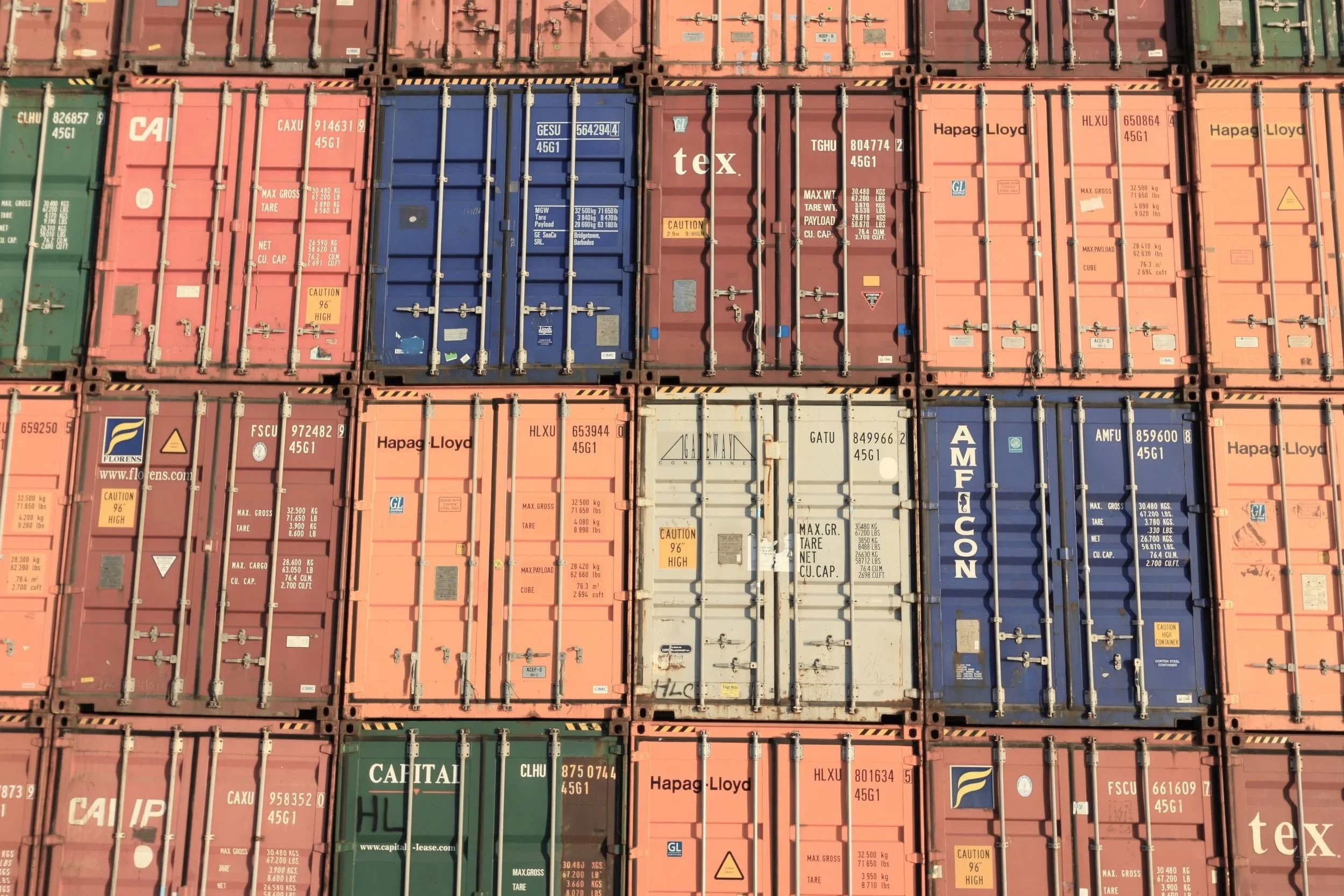
In February, my bus was approaching Manhattan. The black-and-white morning was dreary, cold, and wet. Sheeting rain obscured the view. I was reading. I was dozing. Beyond tired at 9:30 a.m. Not awake. Decidedly vacant. Then the sky cleared. In the middle distance I saw several dozen shipping containers deserted in a New Jersey field. Helter-skelter. Downright ugly. Rusting discards, degrading the view. Probably leaching heavy metals into the soil and groundwater. The shame.
Yet simultaneously, what I was viewing as worthless revealed itself as intimate, ancient, imbued with stature and beauty, possessing the dignity of elders. The candour of that moment took my breath away. And sent scant opinions packing. Situated there, on the spot, suspended and grounded, I wondered, eager for the special responsibility of words.
Writing in Seedtime: Notebooks, 1954-79, Swiss poet and essayist Philippe Jaccottet touches the heart of the matter: “Attachment to the self renders life more opaque….One moment of complete forgetting and all the screens, one behind the other, become transparent so that you can perceive clarity to its very depths, as far as the eye can see; and at the same time everything becomes weightless.”
Weightless, fine, but weightless with an imperative: find the words. Where are the sentences? I saw at once that the field of shipping containers was impossibly poignant. A landscape of expectations, history, and promise. So much stuff, ten thousand destinations. The containers held me. I was curious about each of their lives. What had brought them together? Were any of them wondering about the bus racing by?
Consider the awareness of the shipping container. Its inanimate brilliance. Its capacity - right here, right now - to share its wondrous life. Its contents. Its journey. What observations does it have about aging, about the lines on my face, about the lines I’ve hesitated to write? Why is it reluctant to document its own tensions and its wisdom?
What had these containers experienced on their ocean crossing? Precarious balancing between sky-scraping columns of others. Fearsome waves. The wailing of trafficked children in an adjacent container. Blistering sun. Blinding salt spray. Albatrosses. Countless endless days and nights.
What did they know of their earliest days? Any preternatural sense of elements long ago unearthed for the forge? Folded into shape by engineers’ sophisticated machine tools. Riveted by design to realize entrepreneurs’ ambitions. Sold for delivery to markets of consumers re-modelling homes, police departments gearing up for violence, and kindergarten teachers assembling supplies for the first day of school. Loaded - and unloaded - by stevedores grateful to have jobs to support their families.
For heaven’s sakes, what does a shipping container actually know? Do waves preserve its works and days? Its sudden fear, hearing its rear doors pried open, and feeling the thunder of heavy boots scrambling to get inside? Or its sheer delight when a summer storm washes away weeks of caked, unsightly mud? Containers, once full of industry and purpose, confident in their gleaming usefulness; now worn and battered…empty…forlorn and abandoned. And yet. And yet…seen afresh. Holding what matters: character, significance, story. And the words for it all.
The containers and I didn't just find each other. We found nothing separating us. Of course, containers are astonished by their lives, which are our lives. Yes. We beings. Hallelujah! All creatures animate and inanimate. Aware of each other and our common ground. The generosity of shipping containers parallels the hidden fidelity of trees to each other.
Later on, back home I take my favourite neighbourhood walk along the unpaved alley near the house. A dismal sort of place. Isolated and neglected. Perfectly inviting. And covered with pebbles. I have to ask, “What sensations do you hold from your eons in India? The ladies that made by hand your tiny pieces, by crashing together large rocks? Your voyage? That intrepid shipping container destined for a New Jersey wasteland?”
The gravelly song of the pebbles touching and crunching underfoot confirms an odyssey only stars exploding could have imagined. For my part, I hear pebbles comforting each other, with memories of lazy river beds - lost long ago - while happily composing lyrics for me as we go. I take the words home.
A Note on the Author:
Karin Hillhouse's essays and reviews have appeared in Southwest Profile, the MacGuffin, and publications of the National Science Foundation and the World Health Organization. Her novel-in-progress The Collected Works of Marte Wagoner stems from a writing fellowship awarded by the Rocky Mountain Women's Institute. She holds a master's degree in comparative literature from the University of Wisconsin–Madison. She lives in Washington, D.C.