migrations
Eleni Vlachos
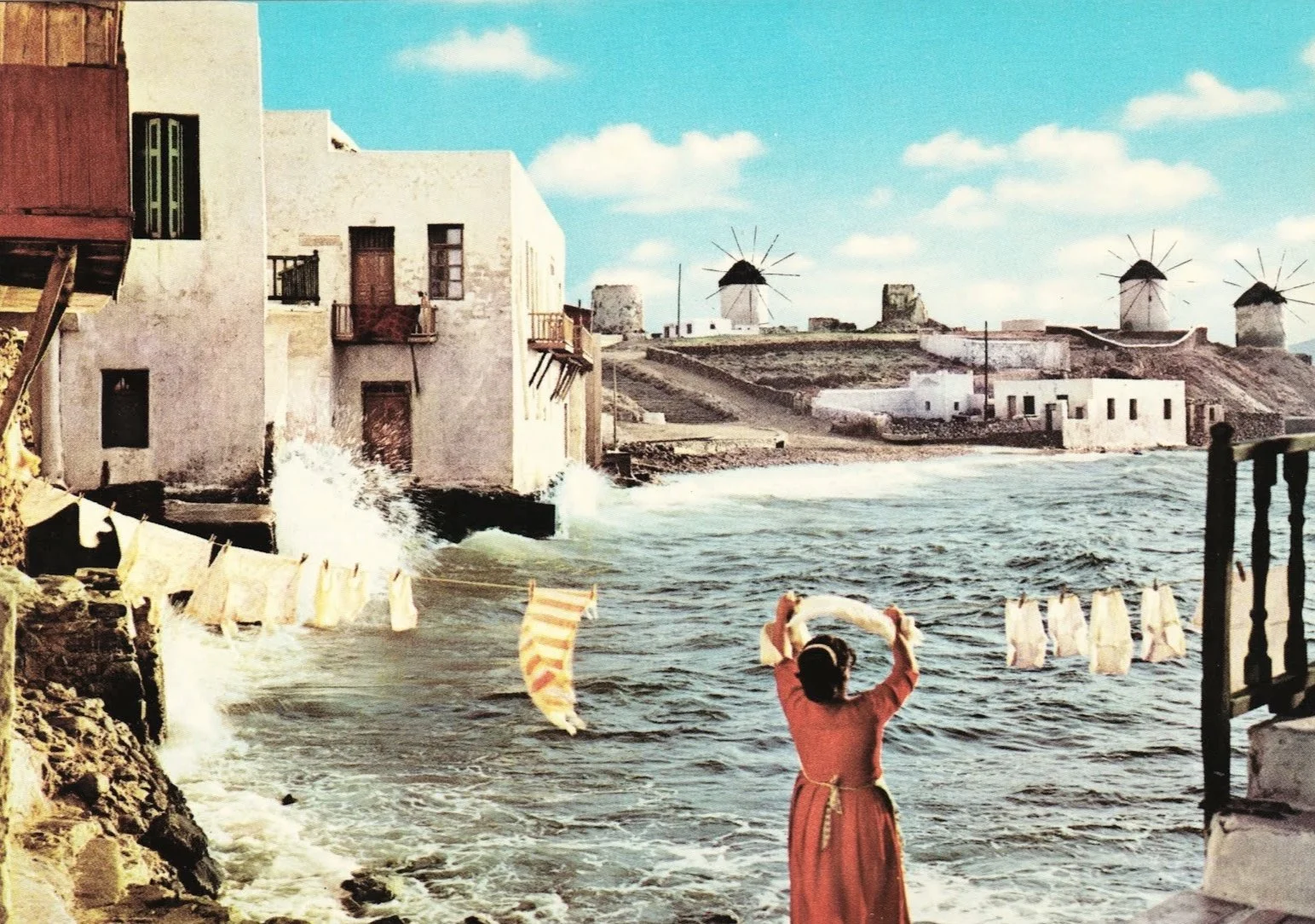
A raft of thirty people washed up on Aphrodite Beach. The passengers slogged through the waist-high seawater, rushing toward the Samos shore. Their arms reached overhead to grip soaked rucksacks. Each sunbaked body contrasted starkly against the flaxen sand as they scrambled through surprised tourists who gawked at this sudden boatload of lives blocking their views and attempts to get away from it all. The migrants darted around the obstacle park of umbrellas and sandcastles in their own version of getting away.
Maria could not unsee the desperate expressions on the video her older sister Sophia shared. Yet they were lucky. Many boats sank before landfall or their passengers died from dehydration. Maria overheard one Afghan migrant telling Sophia about the unrelenting Mediterranean rays baking them for days, the boat churning them in a €3000 carnival ride. Big business for someone, Sophia had said.
Why are they running? Maria’s question hung in the salty Samos air.
***
Zorba the Greek drifted lazily from the speakers at Café Hermes on repeat, mingling with a chorus of international voices falling and rising like the tide. Old Greek men sat on azure taverna chairs playing backgammon, the ping of their dice against wood at speeds suggesting mastery wrought from daily games. Klimataria vines surrounded the men and other guests in the outdoor courtyard, broken only by a mulberry tree growing densely from the center. Thyme, oregano, and roasting garlic drifted from the Café on the meltemi, the Aegean’s strong seasonal wind.
Maria was old enough to help at her parents’ restaurant in Kovathi during high season. Especially now, when her mother must tend to guests in their rental rooms up the hill. She carried tablecloths she called giant paper towels to customer tables, fastening each corner using metal clips with studied efficiency. Most tourists smiled, holding ashtrays and sanitizer out of the way in an exaggerated fashion while she finished. She tried not to frown when they said Bravo! and smiled instead as she was taught.
Their predictable response reminded her of the calculated motions of the tomato men she biked by, sitting on curbs endlessly slapping rubber tomatoes onto a little platter. With each splat, the fat tomatoes flattened into pancakes, then puffed back up. Again and again, the men pretended they too were amazed by the flattening tomato, excitedly looking up at tourists with each whack! The tourists’ gaze drifted to the men for a moment then quickly shot away. Soon they ignored the men. Maria asked her mother why the men sat there all day not selling trick tomatoes. “There is always someone to buy”, Despina said.
It was fun to spy. Maria knew more English and German than she could speak, and listened to conversations. She relished the surprised looks when she uttered a word of comprehension. Sometimes, by accident. Like now when a British man said to his daughter: “How about we go feed the ducks?” and Maria yelled “No!” before she could stop her mouth.
***
Earlier that day, Maria had gone to Paris on Sophia’s old bicycle. Why not? The city lay just at the end of the row of shops. A cloth bag of her mother’s leftovers slumped in her basket. Spanikopita and plump, crimson grapes. While packing her picnic, her mother scolded: Why do you pretend to leave our beautiful country?
She rounded the corner and spotted two tourists next to the canal.
“No!”
She rode closer, barely missing one of Samos’ many cats. She dropped her bike with a clunk, and a few grapes rolled out of her basket. No visitor was safe with her spy eyes and speedy feet. She ran up to the baffled woman and a young boy.
“Stop!” Maria even spoke English like the older girls. She was practically a detective. She planted her hands on her hips while scraping a grape off her shoe on the cement.
The woman turned to Maria, bemused. She lifted her sun hat slightly. The boy held his pudgy hand mid-air, ready to throw a chunk of bread into the canal below. His other hand clutched a plastic bag of stale bread.
Ducks waddled over expectantly toward them through murky greenish-blue puddles. The barren canal dug through Kovathi and drained into the sea near her parents’ restaurant. It was practically hers. Maria stood as tall as she could, shoulders back.
The woman smiled at Maria quizzically and patted her son on the back. He stared at Maria, then stiffly threw the bread to the ducks, but missed them by quite a distance. The ducks waddled toward the bread, their beaks clapping open and shut to gnaw the spongy treat. The boy pointed and squealed, jumping.
Maria considered the pair, making the squished-eyebrow face she had seen her mother use with staff. She pointed to a rusted yellow sign with fading English letters. Why couldn’t people read? She was only 10 and a half and read everything! Beware: Angel Wing. Don’t feed the ducks. Yet the tourists always fed them.
Her mother Despina said she would understand someday. Parents needed a break from entertaining their children. Ducks performing their duck lives took some of the edge off.
The boy stared at her curiously. He was much younger than her, a baby child. Maria guessed they were from Germany, or maybe the Netherlands. She did not have the English words she needed: Angel Wing forced their feathers to twist out at odd angles until they would never fly again.
Maria flapped her arms and puffed out her cheeks while bouncing to create her best impression of a duck afflicted with Angel Wing. She pointed to her mouth, gestured to the canal, then made an X with her fingers. The boy stared at her with his mouth open, then looked up to his mother as if for permission to laugh.
Maria froze. It was no laughing matter. The ducks would be grounded forever. She walked over to the boy, looked straight into his green beady eyes, and pointed at his bag of torn bread.
“Nein!” she barked, shaking her finger in his face.
He dropped the bag and started to cry.
After the tourists left, Maria sat by the canal to make sure no one else fed the ducks as she ate her picnic. Paris could wait. Today, she saved the ducks. Tomorrow she would go to Morocco.
***
A woman from the Democratic Republic of the Congo, a regular, turned and smiled at Maria from a neighbouring table at the Café. She and her friends were enjoying mezethes. Maria knew they were migrants and part of the migration crisis on Samos and in Greece; her parents and the tourists always spoke of it. Greece was the poorest country in the European Union, she heard them say, yet bore the brunt of the burden and received little help.
Usually, migrants did not frequent tourist hangouts, as they could hardly afford it. But the Congolese woman found work teaching French and made Kovathi her home. She spoke Greek fluently. Most migrants wanted to leave as quickly as they arrived, seeking asylum in richer northern countries where they could earn more than the Greek minimum wage of €880 per month. Maria could not tell if the adults were glad the people wanted to leave or hurt they did not want to stay, but her father said we must welcome them. Aren’t we all guests in this world, anyway? Graffiti-sprayed walls elaborated: Migrants welcome. Tourists, Go Home.
Every day a bus arrived from the refugee camp and unloaded migrants into Kovathi to do their shopping. Shop owners greeted them by name as they walked by, and they waved and smiled back, as if to neighbors. This cordiality was hardly what Maria saw on the news. Many were young, starting their adult lives in limbo. They wore pink sun hats and tropical dresses and shorts, arcs of cheerful rainbows painting the blue and white town.
A man raised an empty glass carafe and shook it in the air. Maria hurried to fetch him a second carafe of tsipouro and a bowl of peanuts which she placed carefully next to the bottle. People from America always looked surprised when a kid brought them booze, but this American did not seem to notice. He wore a blue baseball cap a size too large and white tank top on his scrawny frame with Greece is for lovers in blue. A tiny red stain splotched the “is.”
“Someone stole my fanny pack. Right from my lounger while I was snorkeling.” The man shared his story of woe with anyone who would listen at neighboring tables. “I lost my passport, drivers’ license, and credit cards. I’m nobody.”
An older Greek man overheard because the American spoke loudly. He turned to his wife, nodding toward the Congolese woman. “It’s the migrants. Everything has gone downhill since the crisis.”
Sophia once said before migrants the Albanian immigrants were blamed for anything gone missing. There’s a culture of blame in every country, not just Greece, she said. The United States also blames its immigrants. Even the culture of couples blame each other. She had gestured toward their parents, arguing about a receipt by the cash register. Look at them!
The Greek woman shook her head. “It could just as easily be another tourist. Or one of us Greeks!”
The Congolese woman ignored the couple, turning to the American. He seemed relieved for an audience. “Fortunately,” he said, “I still had some cash back in my hotel room in the safe. But I’m stranded! No ID, no credit. I might as well be a migrant.” He paused for a moment. “No offense.”
“None taken. But what makes you think I’m not a tourist?” She smiled.
The man shifted in his seat and nervously bent his cap. “I mean, yes—”
“Don’t worry,” the Congolese woman sighed, her reassurance a tired song she had played for countless others, almost as many times as Zorba in Greece’s tourist hotspots. “Here is where you go to recover your identity.” She wrote an address on a receipt, then turned to Maria, who was filling her glass with water.
“So you love the ducks, eh? C'est mignon! People stuff the ducks so they can watch them. It’s like a zoo, eh? People staring, and the animals can’t move?”
Maria loved her sing-song English. She had been to a zoo in Athens, her family’s winter home. Confining animals for their entire lives so people could stare at them for a few minutes? A life frozen for a momentary look. The creatures seemed upset, pacing back and forth. Or bored, staring blankly from dead eyes. Every summer tourists poured into Kovathi doing the same. Gawking, staring at them as part of the show. Her father said Of course they are staring, everything is new. They are just trying to figure things out.
“Zoos help preserve endangered species,” the American explained as if they were both children, though he had begun slurring his words. The second carafe of tsipouro was half empty.
“Why don’t we cage you up for your safety?” The Congolese woman laughed, and Maria decided to take French to spend more time with her. Zorba the Greek began again.
“And here,” the Congolese woman continued, pointing to the speaker, “we preserve the same song, over and over.”
One could not escape Zorba in touristy areas if they tried, but everyone had a different view. The local said, “I don’t hear it anymore.” The migrant said, “I’m so tired of this tune.” The tourist said, “I love this song!”
Her father insisted it pleased tourists. Maybe the first five times, Sophia said. She pointed to the souvenir shop where shelves of tsarouchi shoes with pom poms sat by wooden ships. “And over there, we sell shoes no longer worn, and boats no longer sailed.”
The American tipped back his head and drank his tiny glass of tsipouro like a shot of tequila, then clunked it back on the table.
***
Maria’s parents told her they must create an atmosphere their guests expected. People are on vacation, tired from demanding jobs. Café Hermes delivered the fantasy of Greece still embracing the “old ways” whether those ways ended sixty or thousands of years ago. Give them what they want. Not what’s real. So their taverna was doused in blue and white paint once required by the Greek government for island tourism, but no longer enforced. Doric columns flanked every corner. Inside portraits hung of older women with black headscarves sitting sideways on donkeys climbing hills. A full-sized statue of Hermes—the herald god protector of merchants and travelers (“and thieves,” Sophia added)—greeted guests.
Maria watched her father Georgos smile at customers she knew he wanted to curse. Greek hospitality cannot die on our doorstep. He picked up their spilled food, shards of broken wine glasses, crumpled napkins. The Syrian busboy bore the brunt of the messes. Maria helped him because he always looked tired. He sent most of his earnings back home to family.
A one-star review could tank their business, Georgos cautioned. Many of his friends had not been so careful. In fact, they acted downright Greek. He read a one-star review of his friend Andreas’ bar: Imagine: We complained about our so-called “sangria.” The waitress refused to make us a different drink. We demanded the manager. His response? “Only stupid people don’t like it!” When we left, the waitress ran after us…we assumed to apologize. Nope. She wanted to ensure we paid for the bad sangrias!
Georgos shook his head, smiling at this incredulous way of treating a customer. But Maria thought he also seemed envious of his friend for being so bold. How her father would love to say those words, to abandon his fear of reviews and stars. Yet Georgos also held a deep, genuine affection for his visitors, many of whom were considerate and curious. He loved telling them about Greece and hearing stories from their countries. He spoke English, French, and German, and knew Hello in Japanese, Danish, and Mandarin. He even knew one word in Swahili, Habari, since it was also Greek: What’s the news?
Words migrating, he said to Maria. Long ago, one traveler greeted another: Habari. They are gone, but the word remained. Isn’t that something? Maria thought about it. She supposed it was something.
The American knocked over his carafe of remaining tsipouro. The crashing glass hit in perfect time as Zorba accelerated to its speedy conclusion.
“Opa!” someone said.
Maria rushed inside to fetch the dustpan and broom. She practiced No worry to herself a few times before reaching the spill, the broom taller than her. The Congolese woman eyed the man wearily.
The American apologized and asked for the bill. “Half price,” Georgos said. “For your misfortunes.”
The American muttered “efhara….sto” and dropped a few coins on the table. As he rose, he stumbled and kicked over his chair. Georgos rushed to right both it and his guest. Maria brought a tray of freshly cut fruit for the Congolese woman’s table as a kerasma, then said the French word her father taught her, hoping she would be invited for lessons: “Voici.”
***
The Dane appeared timely as punctual as a Swiss watch with the evening music at Café Hermes. From the first bouzouki note he drifted cheerfully among tables of hesitant customers and bade them to join him and dance to the traditional Greek folk songs, swinging his arms. “Come on! Get UP!”
This Danish Zorba was past mid-age, but only slightly. His chest held the suggestion of muscles beneath his white tunic shirt. His scalp crimsoned from hours at the beach. He sauntered over to a table of Americans.
“Dance with us!”
They smiled, shifting uncomfortably. He placed his hand on the man’s shoulder. “What do you care how you look?”
They remained seated. He leaned in and lowered his voice. Maria strained to listen. “Look, when I come here, I dance, I have such a good time. No one knows me here. No one knows you either. What do you have to lose?”
Two of the Americans slowly rose, one masking his embarrassed face with a contorted smile, the other opening her mouth as in why not? They followed the whooping Dane, the woman’s boho dress flowing around them. Bolstered by his new disciples, the Dane turned and held out his arms like crooked lighthouses, beckoning everyone to join. A few more ambled up.
Maria liked to watch because those who answered his call always left the dance floor full of joy and sweat, victorious like champions, their faces unmistakably giddy. She wondered what made them so happy. Sophia said it was the ecstatic trespass of crossing over into another culture.
Maria continued to wonder.
The Dane frequented her parents’ restaurant ever since she could remember. But she supposed he was right, she did not know him. She was accustomed to people who wanted to escape from being known. She kept guests at a distance like her parents taught. No more than a name, a friendly hello, and a how is insert-your-country-here or sports team doing. A person can feel welcomed without getting too close, her father said. In turn the person need not care how they appear to those serving them, her mother added. Like any exchange for money, Sophia finished.
Everything is prostitution, Cavafy once wrote. Or said. Sophia had read this, somewhere—she couldn’t place it, and when she tried to find a reference, she failed to produce one. Maybe it was not on Google yet, just buried in one of his books. Certainly she had not made it up. Maria heard Sophia tell her friends back in Athens that the musicians who played at their restaurant were paid, no different than sex workers. Didn’t they play the same songs over and over as if for the first time? What is tourism but a repetition of something that was once charming? Like a band's hit song, the spirit had left long ago. The band performed for others’ cravings.
Sophia said the weight of prostitution is what made the comparison provocative. The assumption being that the world’s second-oldest profession (the first: scam artist) was dishonorable. Their restaurant was no different. People exchanging money for a service, their parents faking familial familiarity. Sophia never said any of these things in front of their parents, and Maria knew not to repeat them. She could barely understand, herself.
Their mother Despina was fed up with her crazy ideas already, anyway. She said Sophia was big-headed because she would soon be a high school senior.
On the ship to Samos after school let out for summer, Sophia had declared she would no longer eat animals. It’s a phase, Despina said later, showing her how to make Imam Bayildi. Something you can eat. Sophia frowned. Is kindness a phase?
Her mother quietly stuffed another eggplant casserole boat.
Tourists devour the delights of a new land, Sophia whispered to Maria one night out of Despina’s earshot, but they are also force-fed like intubated geese, producing fatty diseased livers. Maria shuddered. Foie gras.
Gavage, the Congolese woman told Maria when she asked her how to say force-feed in French, so she could dissuade French tourists at the canal. Gavage began in Africa, she clarified, after Egyptians noticed geese overfed themselves to prepare for long migrations.
Maria frowned. Why must everyone stuff the birds?
***
Maria rose before work the next morning to bike to Morocco. She stopped at Andreas’ café. Eleni, his daughter, was petting stray cats under one of the tables. Maria missed her friends back home in Athens, who were summering on other islands or in their country homes. Eleni was kind of boring but the only friend she had.
“Want to go to Morocco?”
Eleni looked like she just ate a sour lemon. She jerked her head up and clucked her tongue in the Greek no. “Daddy wants me to stay here today.”
Morocco was overrated. Maria returned to the canal and stared at the ducks to inspect them. Some had turquoise and royal blue shining heads. Their feathers glistened sesame and chocolate. She looked for signs of Angel Wing, but it was hard to tell.
Behind her, a row of crumbling homes lined the street, partially destroyed by the recent earthquake. A few people wandered past.
“Look at that!” one said in English.
“Someone lives there?” said another. “You can see right through it!”
One person took a selfie in front of Katerina’s home.
“They are just taking photos,” her father said, later. “Let them enjoy themselves. Have I raised a police officer?” He laughed and pinched Maria’s cheek.
“What else are they taking?” Sophia asked.
***
Today, Germany. Maria heard Berlin was nice this time of year. She carried her bike down the steep stairs on her secret way to the canal, carefully balancing her lunch in the basket. She had to travel while she could. Tourist season was ending and soon they would return to Athens. Sophia already had.
Maria’s father prepared the restaurant for closure. Only a handful of merchants stuck around for the winter. The locals held them in high regard for not leaving them. Kovathi felt abandoned, or—like Sophia said—a body used and discarded. Even the tomato men had disappeared.
Despina was busy cleaning, or rather overseeing the cleaning, of the guest rooms. Their housekeeper Flora was an older Albanian woman. Yesterday, Maria heard her mother yell into the phone: Flora? I told you, no cleaning today! Tomorrow! How many times do I need to say the same thing? Despina had then paused, her eyes widening, appalled. Apologies crashed from her mouth like waves. Flora, their final guest, had left her blouse and wanted to pick it up. Despina confused the one she croons to and is paid by with the one she yells at and pays.
Maria pedaled by the canal and saw graffiti, black and red. She read the English words slowly. Tourists are in black. And in red: terrorists.
“Tourists are terrorists,” she muttered, not understanding the word. She called Sophia.
Maria had seen many different types of tourists. None of them would bomb her town or take anyone hostage. There were those who fed the ducks and gave them Angel Wing, but she did not consider them terrorists. Sophia said the difference is whether you try to join a community as it is or mold the community to your wishes. Like gentrification, forcing your way.
Sophia spent most of her time with friends in Exarchia, the Athens neighborhood her parents forbade her to go. It’s dangerous, they said. Full of anarchists. So many demonstrations, like the recent protest of the new Metro subway line. Sophia said Exarchia was hard to reach, and they wanted to keep it that way. Distance or ease? The first organically preserves the unconnected tribe, hidden from the world’s influences. The second forces them to stay the same in another way.
Maria finished her lunch and pedaled past Berlin toward Aphrodite Beach where the canal emptied. The shore retreated like a receding hairline. Broken straw umbrellas, plastic bottles, and cigarette butts ravished the empty beach. A shoe poked out from the sand, and Maria wondered if it belonged to one of the migrants who washed up the day before in another boat from Turkey. Only ducks who couldn’t fly back home for the winter plodded around from the nearby canal.
In the distance, a young girl approached one and tore off a piece of koulouri bread. Maria walked closer, could hardly believe her eyes. She started shaking. She cupped her mouth and yelled at Eleni: “Ohi, STOP!”
A Note on the Author:
Eleni is writing her first novel. Her fiction and non-fiction have been published in The New Republic, Turning Leaf Journal, Spotlong Review, Roi Fainéant Literary Press, and others. Eleni also drums for an indie rock band. She was raised in Seattle and has grown older in Durham, New York City, and Philadelphia; she now resides in Athens, Greece. Her new craft series Reading Like a Writer is on Substack: https://substack.com/@elenidvlachos